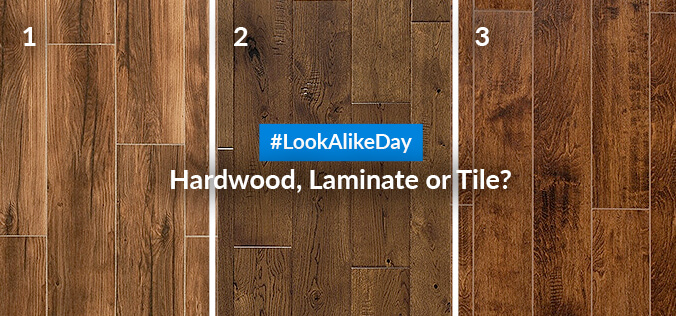
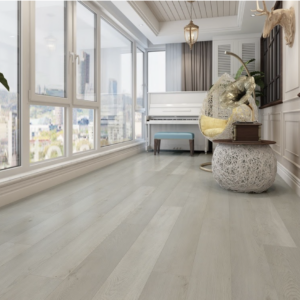
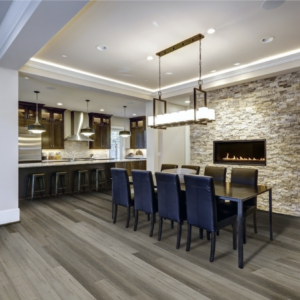
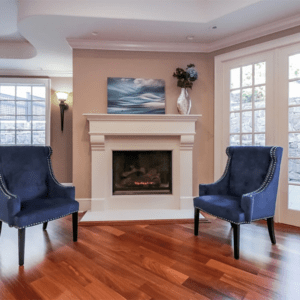
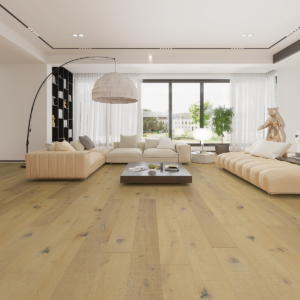
As it’s been said on this blog many times, and can’t be said enough, is that laminate flooring has evolved since it was first invented. There have been many features that make laminate a practical choice in a flooring surface. For versatility and ease of installation alone, it’s been a go-to solution for many people for many years. Only recently though has it been thought of as an aesthetic choice as well as a practical one.
One such innovation in recent years has been the piano finish laminate floor. Take a look at this video featuring Co-Founder Rob Banks, who talks a little bit about this variety of laminate flooring. He’s got his salesman’s hat on in this video, just because it was a part of our product announcement series. But in it, you get to see how this line of laminate floors got its name. Take a look:
As Rob points out, the piano finish laminate floor is so named because of its high-gloss finish - not unlike that of a grand piano, one might say. At this point in the evolution of modern flooring, laminates are not simply measured by how practical they are, and how well they mimic a natural surface on a superficial level. It’s measured by artistry, too. This is one of the gaps that piano finish laminate floors seem to fill; a practical floor with a touch of class.
For the second year, we here at BuildDirect have gathered a group of ragtag, mustache-worthy misfits for this year’s Movember fundraising effort. All proceeds for our team’s efforts will be donated to Prostate Cancer Canada.
See the BuildDirect Movember Team page (’Eenie, Meenie, Miney, MOs’) to get a list of our participants, and to find out a little about their MOtivations are for getting involved.
Take a look at this video which explains what Movember is, and how this global effort raises awareness and funds for men’s health, specifically for prostate cancer research.
In addition to taking donations for the Movember charity, our guys have organized an event on November 26, here in Vancouver at the St. Regis Bar and Grill. You can learn about that event on our Facebook event page and you can also see some of the fabulous Mo’s from last year, including yours truly. I’m front and center sporting what the team dubbed the “dirty cop on the take” mustache.
Last year the BuildDirect Movember team raised over $800 and we’re hoping to crush that number this year. Please feel free to donate to the cause and come on out to the event if you are in Vancouver on Nov. 26
Here’s to the Mo’!
Another worthy charity event I’m supporting this year is the 2009 SEO Poker Tournament in Las Vegas, Nov . 12 at the Mirage.
Recently, we featured a miniseries about wood floor moldings, published every Friday for the last few weeks. Just by way of a recap, here’s BuildDirect Co-Founder Rob Banks talking about each molding we covered. Take a look!
As mentioned in other posts, wood floor moldings are the unsung heroes of an installation. No one is supposed to notice your moldings. But, were they not there, the whole look of a wood flooring installation would be changed, and changed for the worst.
It’s easy to think of a wood floor installation as a functional benefit, and easy just treat it like another chore to do around the house, maybe. Wood floor moldings reinforces the functionality of a quality wood floor, but they also add something else - artistry! And when you’re looking to get the effect of a floor that looks as though it’s always been a part of your home or office, quality wood floor moldings can help you to get there.
This is a treat, everyone. Here’s a guest post from Shannon Bilby, content manager for Creating Your Space, and chief blogger at fromthefloorsup.com, a blog I read and recommend. Shannon is a trusted voice in the flooring world, and we’re pleased to present her post right here. Thanks, Shannon!
Cheers!
Rob.
***
With today’s economy and thoughts on the future, people are spending more and more time in their homes. With the uncertainty of the future of the economy, people are also staying in their current homes more often rather than moving to new homes. Because of this trend, changes are being made to their homes to make them more comfortable and livable.
Instead of going on trips to the spa, master baths are being transformed into personal retreats. Rather than just installing neutral floors, different tones, textures and patterns are creating more personalized spaces that make it more comfortable and appealing to spend time in.
By eating at home more often, improvements are being made to kitchens for more convenience and comfort. With the decrease in business traveling, master bedrooms and living rooms are being upgraded with more comfortable and durable flooring because more and more time is being spent at home.
The introduction of more linear shaped tiles is allowing for more creative designs to be implemented. Multiple shapes, sizes and textures are being used together for creating unique and personalized looks.
Due to more and more budget conscious spending and spending more time doing activities in their homes, laminate floors will continue to be a popular choice as an alternative to hardwood floors, tile and stone.
As green becomes more and more important and accessible while technology continues to make advancements in the flooring industry, I think we will see more green flooring products offered and used in homes.
I hope that glass tiles will continue to be used as accent tiles, wider and darker hardwoods will be used as well as carpets that have advanced and superior stain protection. It will be interesting to see if more color will be used throughout the home or if safer neutrals will be the choice.
***
Shannon Bilby is a contributing writer and independent contractor for Creating Your Space (CYS) to the industry blog From the Floors Upwith over 15 years of flooring, design and construction related experience . Creating Your Space is a retail program that offers floor covering retailers a state of the art, cost effective, easy to execute website, social media packages and SEO to help connect with customers early in the buying process.You can follow CYS on Twitter @CYSWebsites and Shannon @sbilby. You can also become a fan of CYS on Facebook at www.facebook.com/creatingyourspace .
And so we’ve come to the last entry our miniseries about wood floor moldings. Watch for a recap post next week!
This episode is all about stairtread moldings, and here’s BuildDirect Co-Founder Rob Banks to explain the function, and to display the look, of stairtread moldings. Take a look:
When it comes to stairs, you’ve got a choice between stairnose moldings and stairtreads. The advantage of stairtreads is that you’re adding a complete stair covering that incorporates your choice of material (bamboo, hardwood, laminate) as well as the bullnosed edge that you’d get with the stairnose.
So, the extra cost is balanced out with the fact that you’re accomplishing both wood flooring effects at the same time; covering the whole stair, and getting that finished bullnosed edge at the edge of each stair. As Rob mentions, a lot of installers prefer this route because of the time savings.
As it has been well understood by now, wood floors are not just products you buy, they’re an investment in the look and feel of your home or place of business. This means that you’re going to want your money’s worth in the long term, not just a quick fix in the short.
This is particularly true when you’re dealing with engineered hardwood flooring, which is generally treated as a long-term and ideally lifetime floor covering. As such, reputable manufacturers are constantly testing their products, to make sure that they will stand up to wear over long periods of time, so much so that they put their products through processes that simulate common sources of wear.
One big one is moisture testing to make sure that the laminate layers that seal the surface of a wood floor don’t peel when exposed to rigorous moisture testing. Here’s BuildDirect Co-Founder Rob Banks in the factory, where some very specialized equipment is used to test engineered wood floors before they are shipped to distributors, sellers, and buyers of wood floor products. Take a look!
When you’re investing in the value and level of comfort of a space, it’s good to know that there are processes in place that test the products before you buy them.
On Friday, we published our highlight reel about how to install an engineered floor, so our miniseries about wood floor moldings was bumped. But, here is last week’s installment today!
In this episode, BuildDirect Co-Founder Rob Banks talks about the accessory that makes the transition from your wood floor to your stairs - the stairnose molding!
Stairnose moldings allow for effective transitions from floors to stairs, and they also have a way of visually bringing the effects you’ve achieved to the next floor, too.
Once again, wood floor moldings have a subtle power to unify two or more ‘zones’ in a space, maybe not in a flashy way. But, certainly moldings in general add refinement, which is always a plus in any space. Stairnose moldings do this not only for multi-room installations, but also multi-floor.
Below is a video showing you how to build the perfect engineered hardwood floor. Best of all, it’s a “show me” rather than a “tell me” video, meaning you’ll see one of us BuildDirecters doing it step-by-step. And it’s on YouTube so it’s accessible to all your friends-especially the ones that you’re going to call to help you build your floor!
From prepping the subfloor and laying the underlayment to racking and laying the planks, you and your buddies won’t want to miss a single step.
Not too long ago, we talked about the 5 things you must know before you buy laminate flooring, which was a high-level set of criteria when shopping for the best laminate flooring to suit your particular project. To supplement that video and post, we wanted to show you a closer look at the specific types of laminate floor products out there which you’re likely to see when shopping.
So with that in mind, here’s BuildDirect Co-Founder Rob Banks with a few pointers on what to look for when you’re faced with a number of stylistic choices when it comes to modern laminate flooring, with a lot of close-ups of some example to give you an idea of the choice range you’ll see when ordering samples or taking a look at boards in a retail setting. Take a look:
One thing which Rob mentions about laminate flooring today is that most of the newest choices have a specific goal in mind; to emulate the feel of walking on a real hardwood floor, not just appearing to look like one. Luckily, I think this is where laminate floors more easily excel when compared to even a decade ago. You can really see where the industry has evolved the product to meet what consumers expect of it.
But, even here it’s acknowledged that those expectations should be adjusted according to the ticket prices, which often can be affected by things like board thickness, surface treatments, and even the quality of a locking system. In addition to the basic 5 things you need to know, sometimes it pays to nail down the details of a specific laminate product, too.
This week’s entry in our miniseries about wood floor moldings is the reducer molding, which is used as a transitional accessory between two rooms where floor covers present unequal thickness. Here’s BuildDirect Co-Founder Rob Banks with a demonstration on how you use reducer moldings:
Typical use for reducer moldings are between dining areas and kitchens, between wood floors and linoleum or vinyl tile. As such, it’s kind of an unsung hero where a wood flooring installation is concerned.
Yet, in some ways all moldings are unsung. High quality moldings, when installed correctly, are supposed to be invisible where the designer’s eye is concerned. When a reducer molding does its job right, you achieve the appearance as though your two varieties of floor absolutely belong together, side-by-side.